.𖥔 ݁ ˖ ✦ ‧₊˚ ⋅ Lai Yi Ohlsen

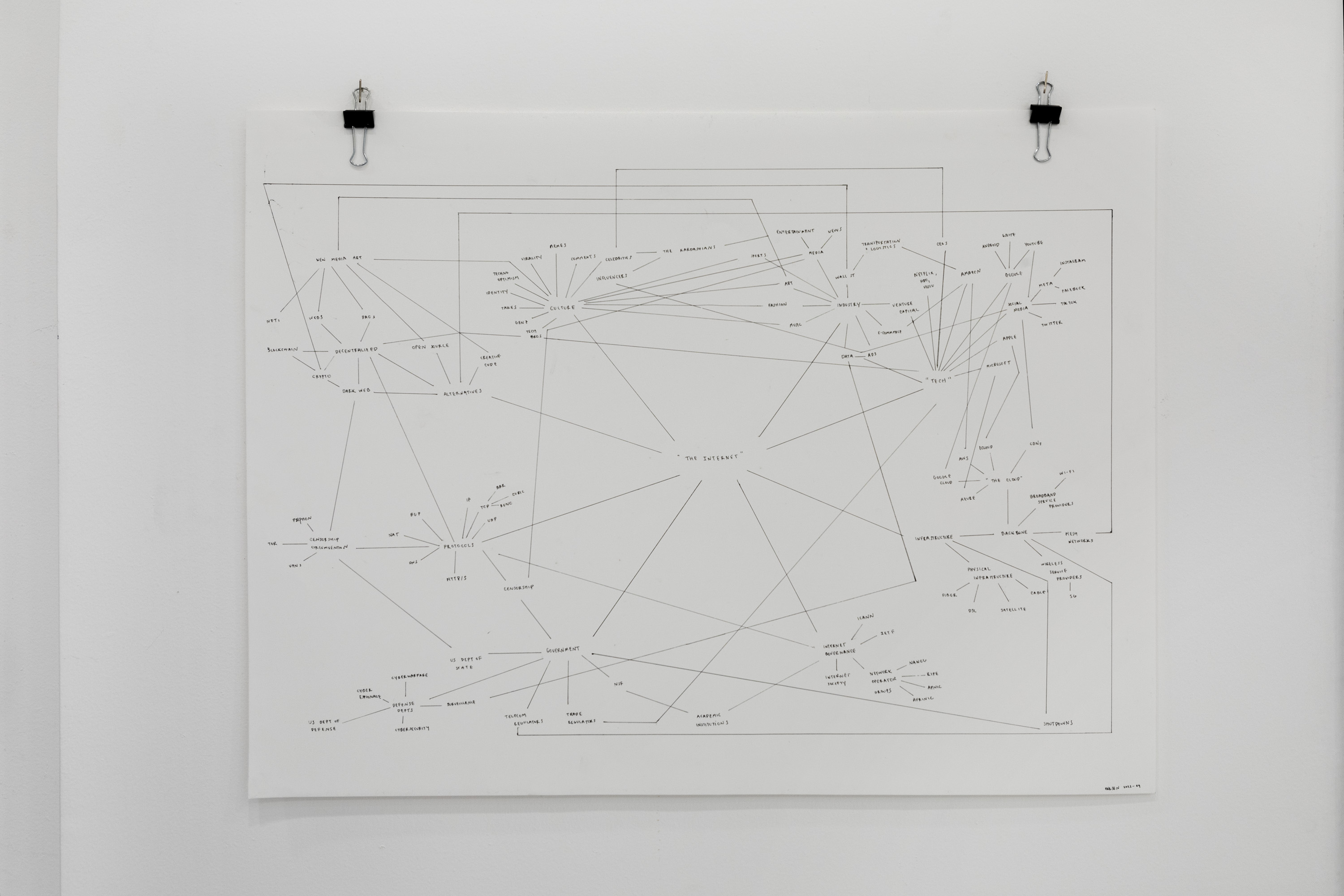
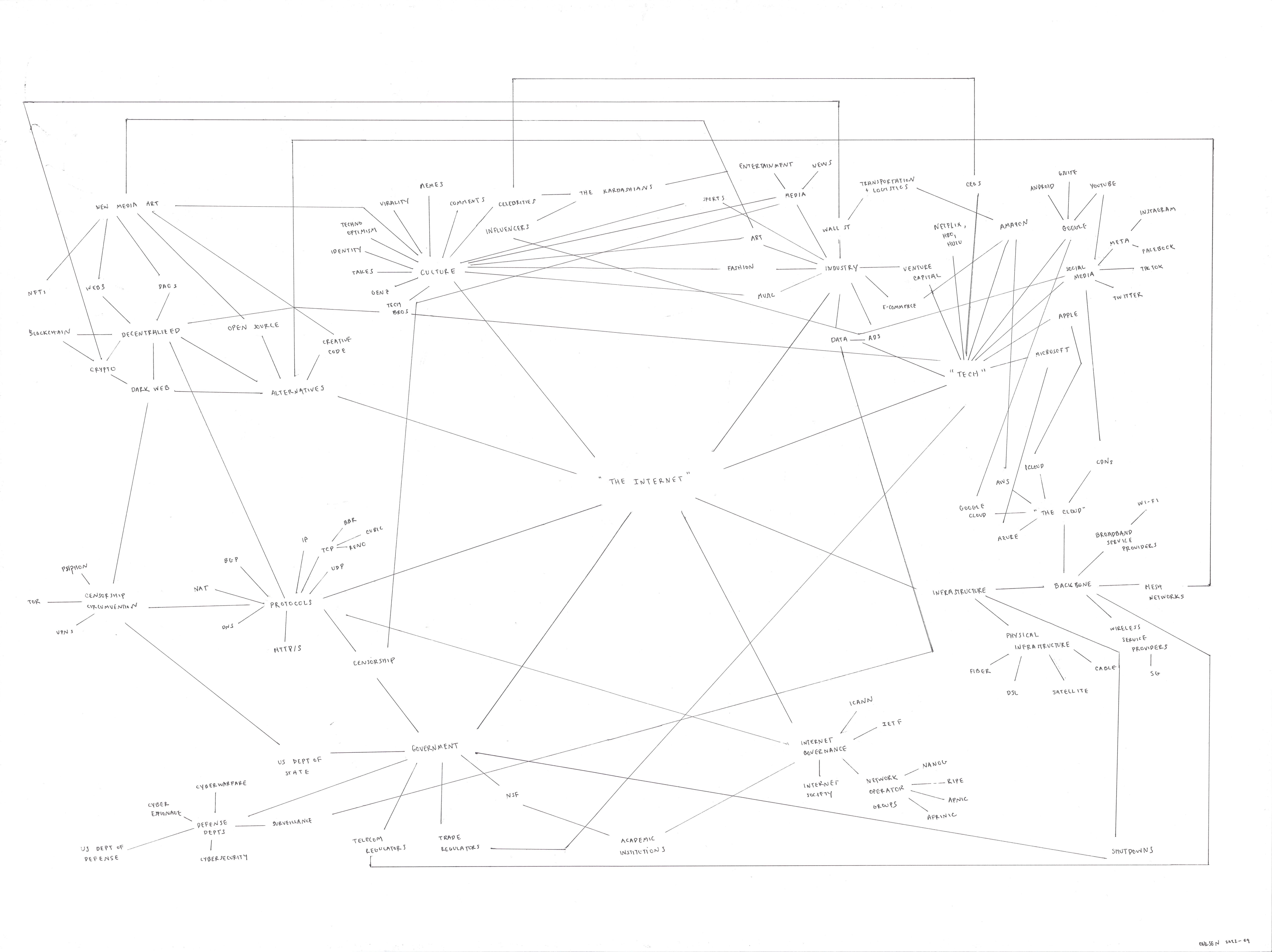
"The Internet" (2022)
Taking inspiration from the narrative diagrams of neo-conceptual artist Mark Lombardi, the work moves between diagram and drawing to connect various actors, concepts, and institutions who are all known to have an influence over the internet, and yet are rarely associated with one another. Drawing upon the artist’s experiences as a technologist and researcher within a diverse set of Internet-focused ecosystems, it places these dimensions on the same plane to consider: who has influence over the Internet? How are these influences related? How does power flow between these nodes and who do we need to involve if we want to reimagine its shape?

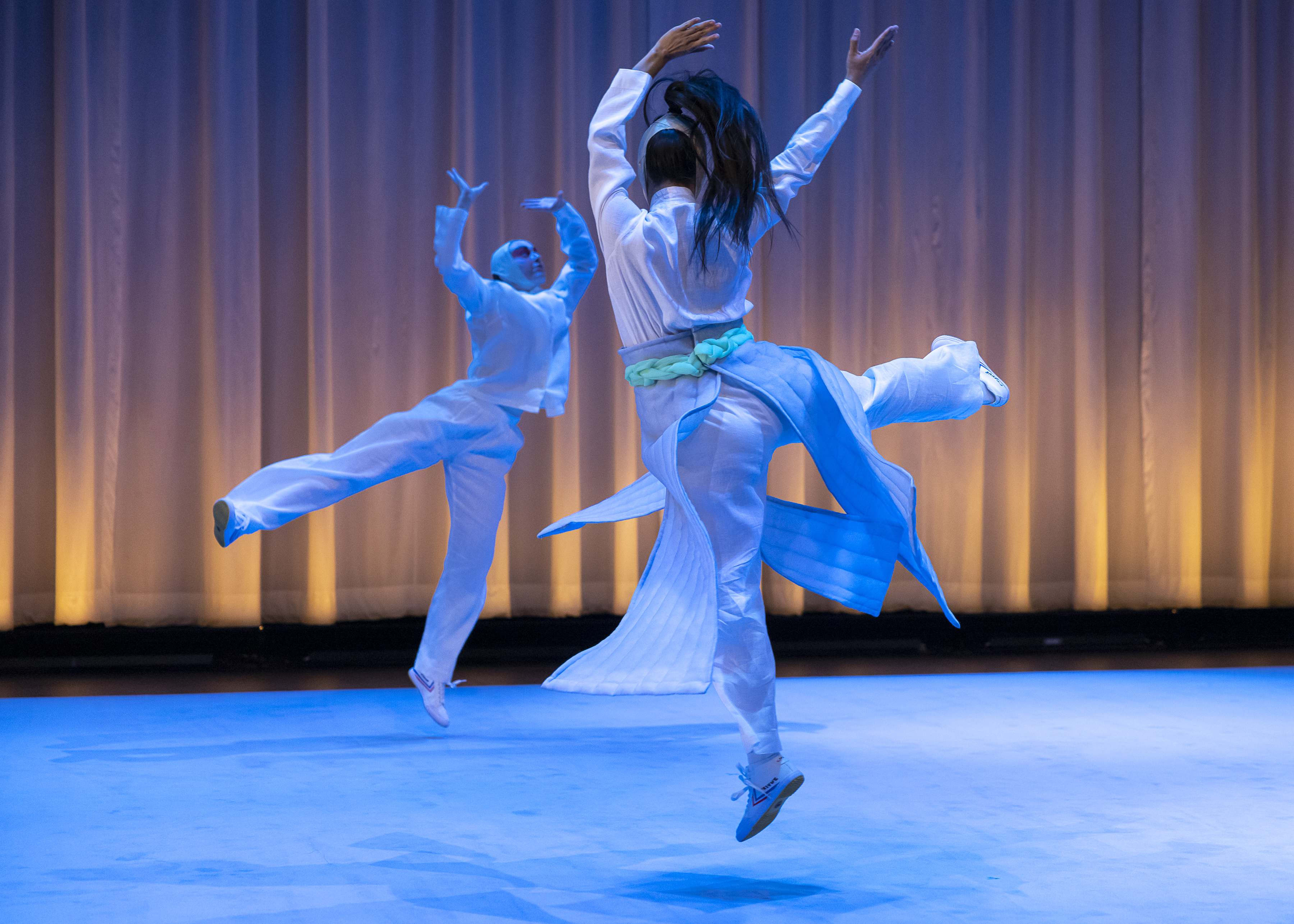
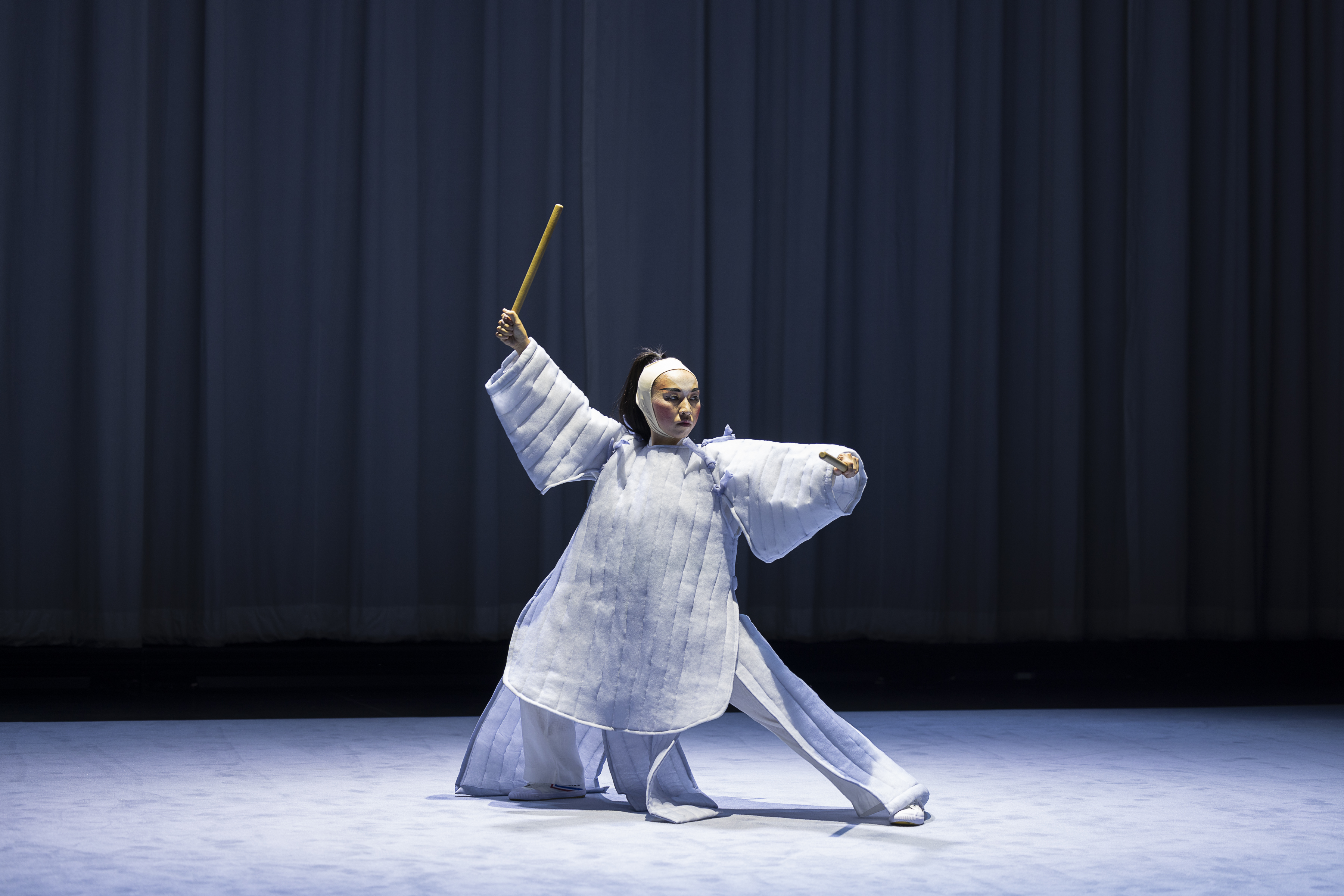
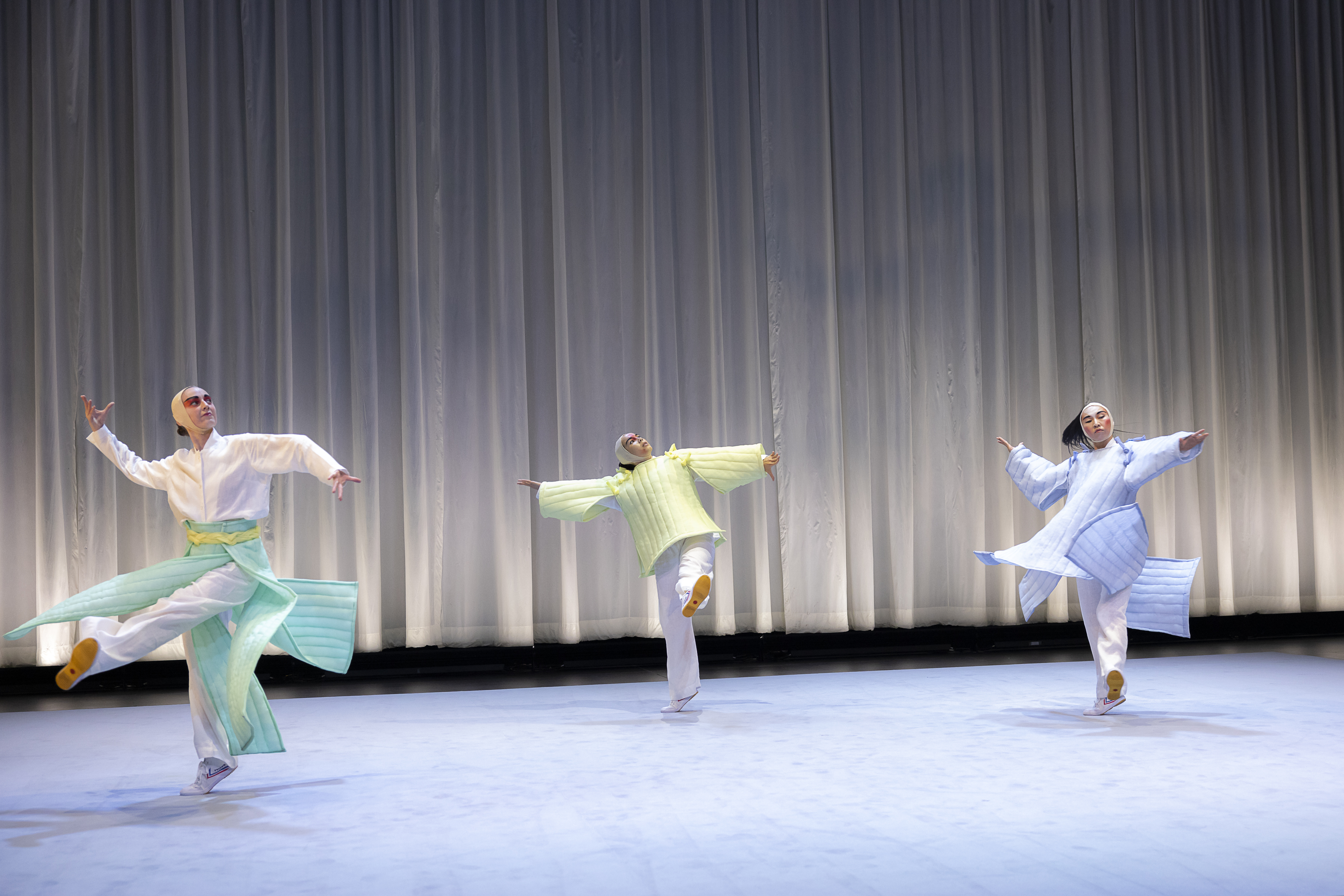
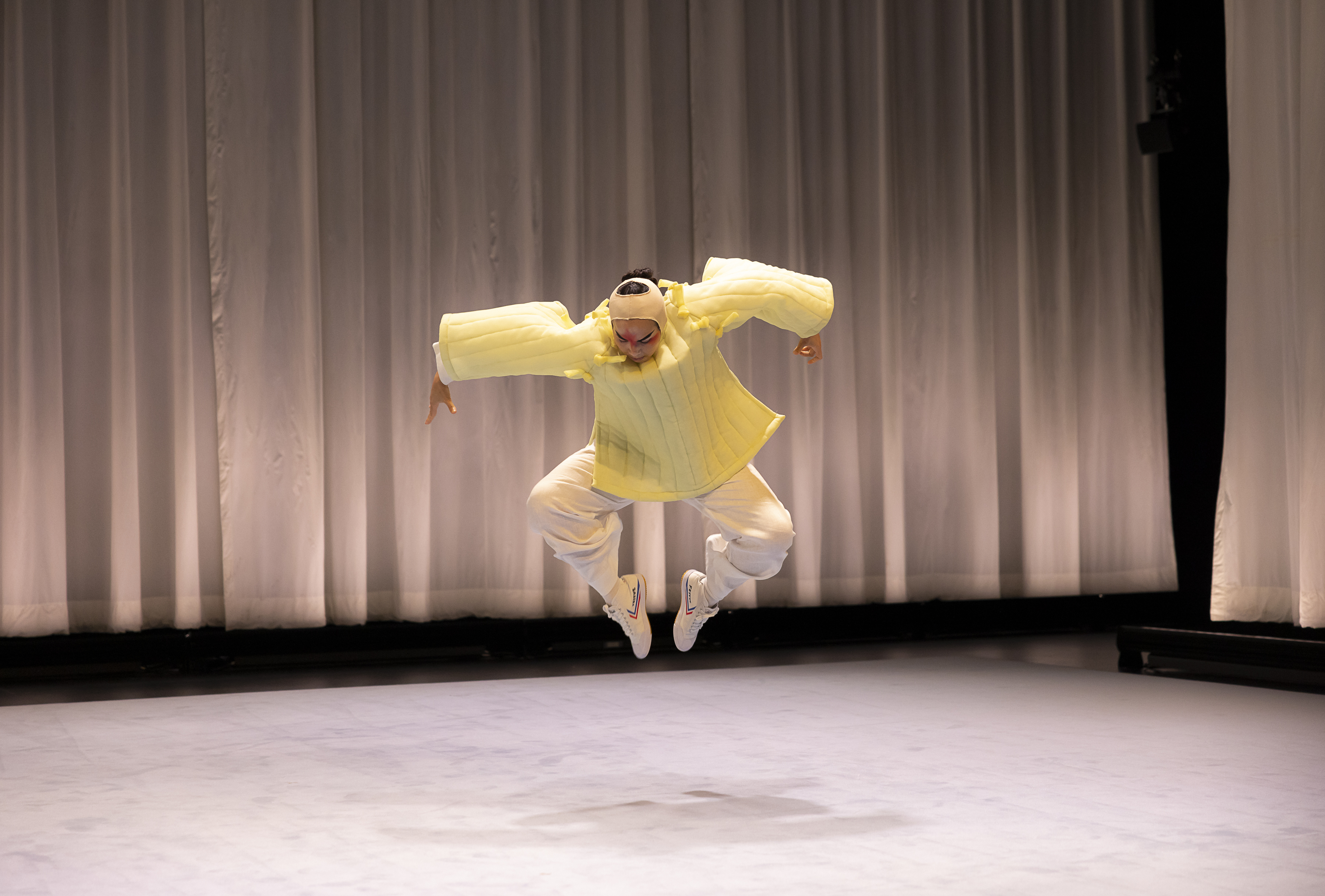
Tiger Hands (2022)
Dancer and collaborator in Benjamin Akio Kimitch’s Tiger Hands, a “cosmic, sunrise-colored search for authentic personal expression, using elements of Peking opera as a transformative source of beauty and strength.”

Choreography of Circulation (2019)
If, as Marshall Mcluhan famously said,“the medium is the message” then what can we learn from the mediated body? And if the body is being mediated by digital bits, is it more than a “remediation” of the technology we use to disseminate it? That is, at what point does the body’s ability to move as its own medium give way to its for-better-or-for-worse digital counterparts? What qualitative shifts occur when a body moves as a file, a fragment, a zero, or a one - and do they even matter? When looking at the chunky, blurry version of reality that technology asks us to (literally) subscribe to, Hito Steyerl reminds us,“one could of course argue that this is not the real thing, but then—please, anybody—show me this real thing.”
Produced while in residence at Pioneer Works, Choreography of Circulation follows my moving body through one thousand successive uploads and downloads via Instagram's compression algorithm. The full piece can be viewed on Instagram; the video shows every 100th iteration.

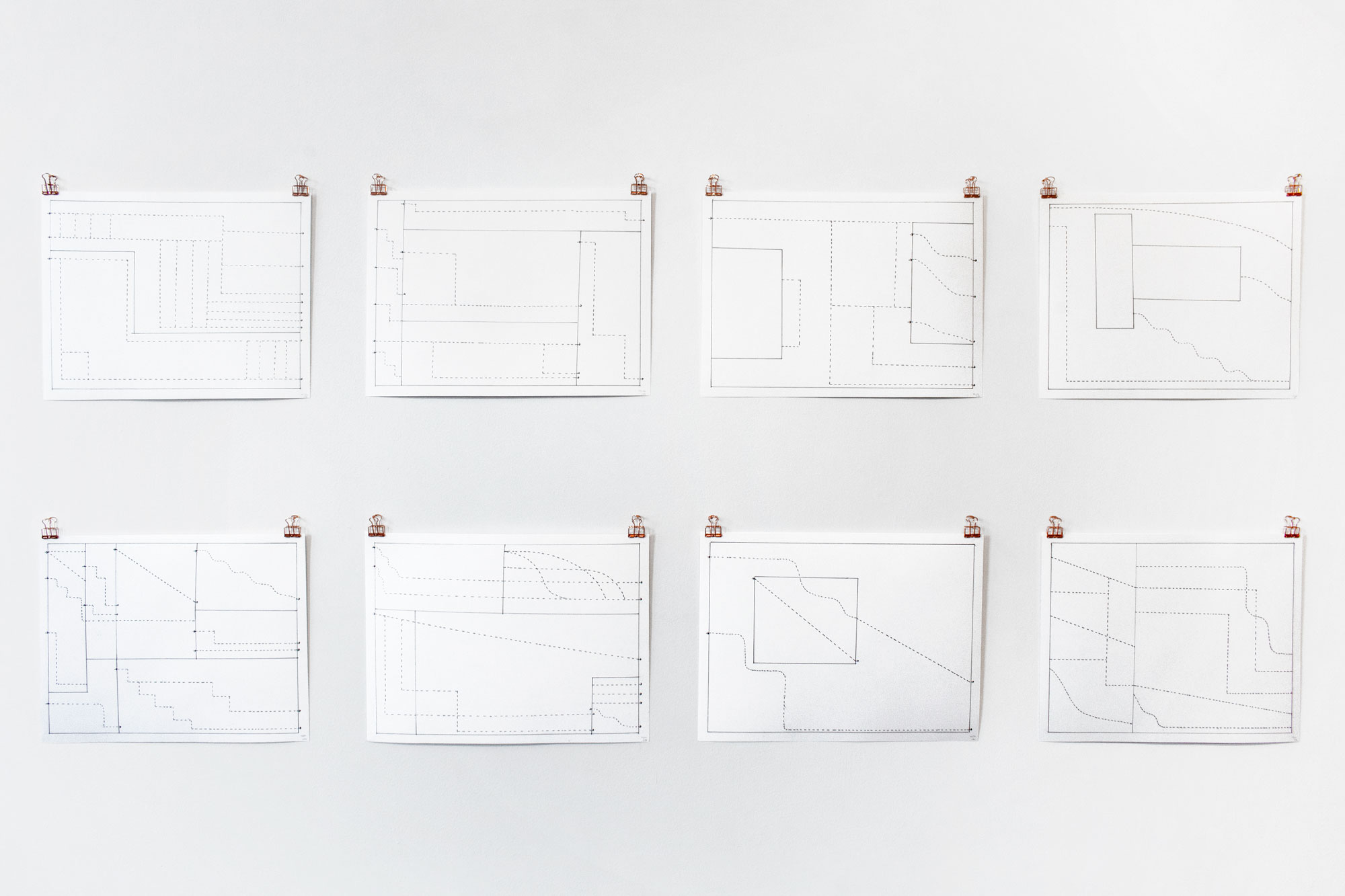
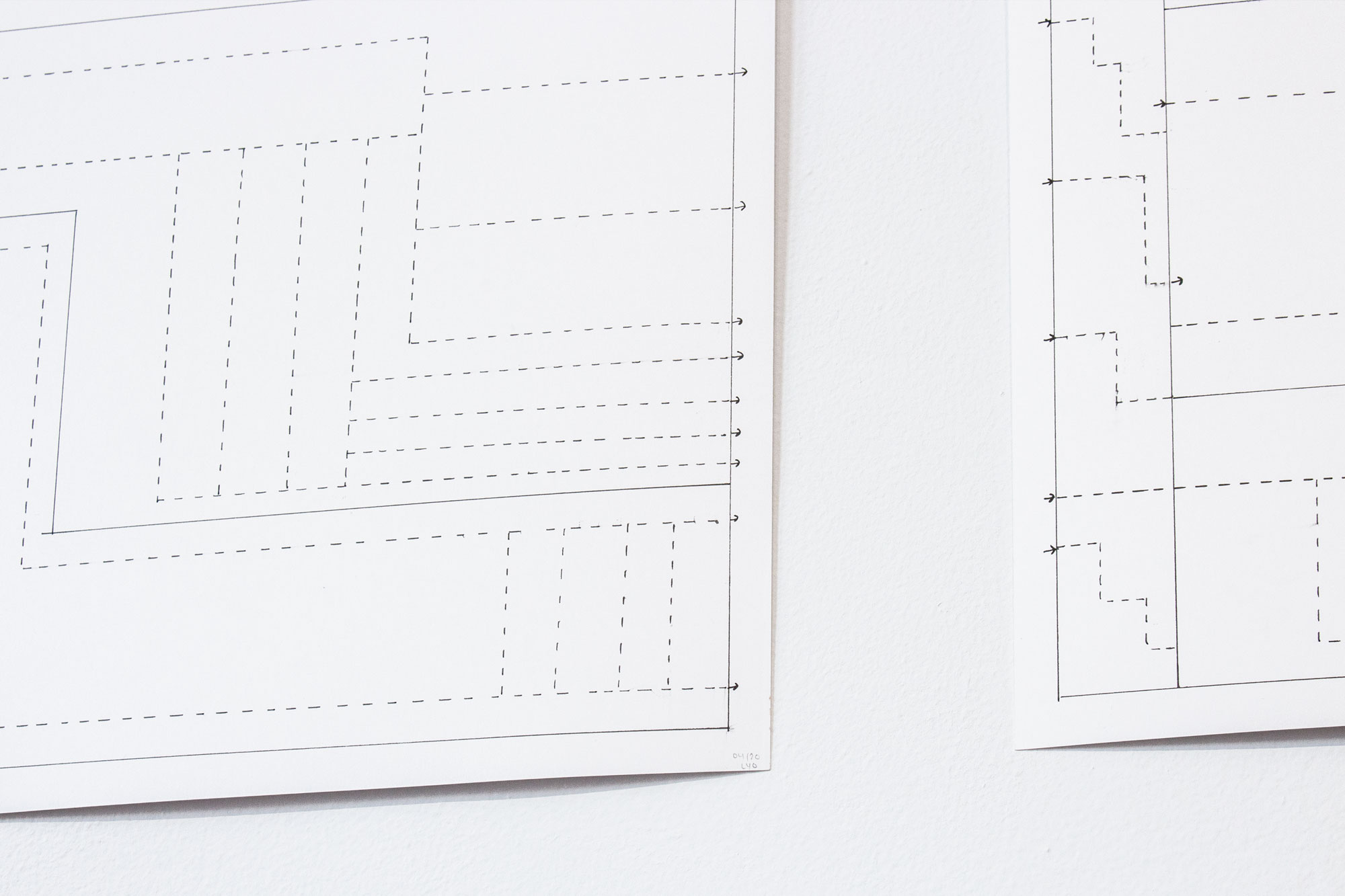
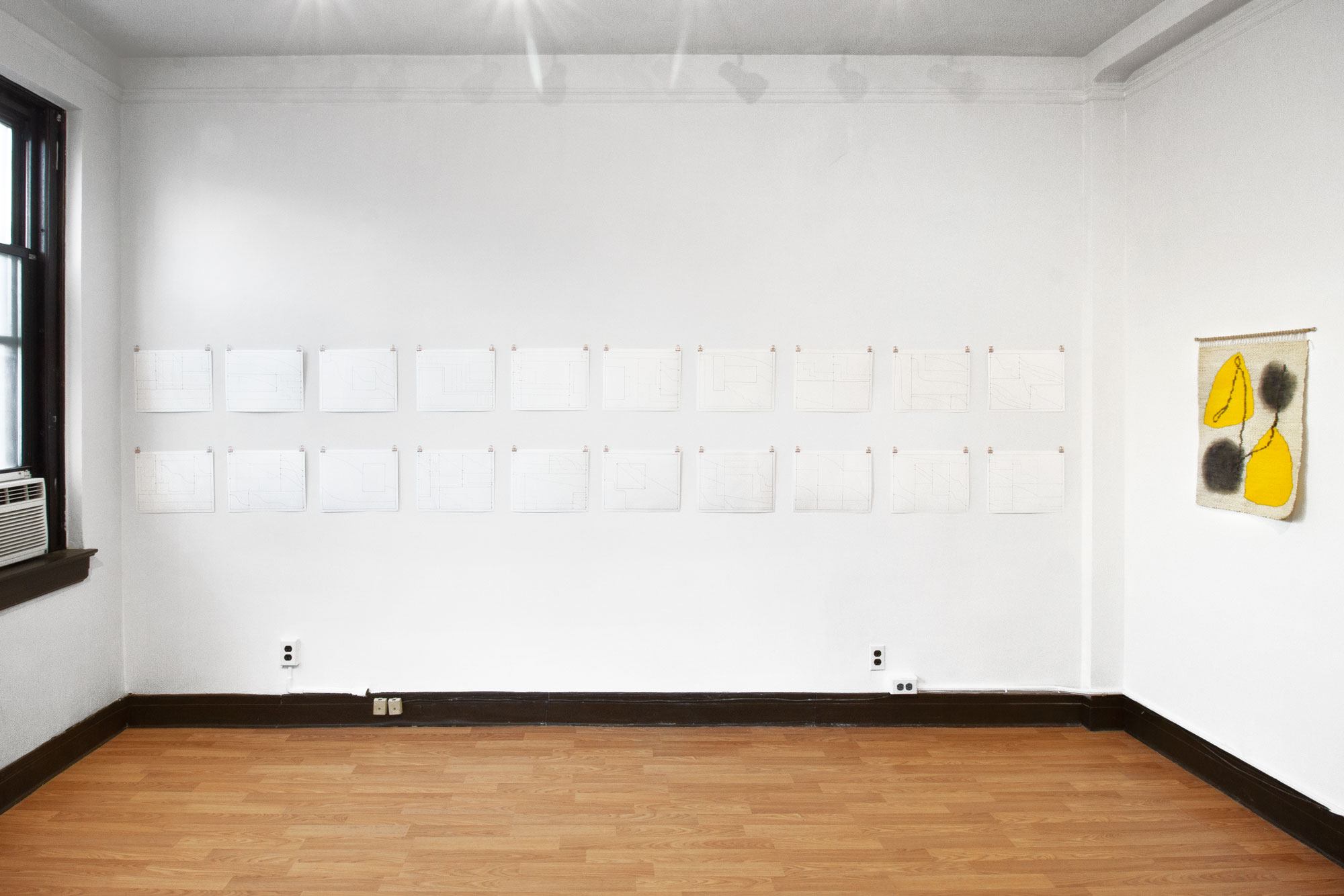
Time Sequence Choreographies For a Room (2019)
A series of twenty diagrammatic drawings that function as choreographic scores. The simplified scores explore rhythm and movement through the concept of “sequence diagrams” in software engineering, which indicate how a message is sent and received. Additionally, the works take inspiration from early digital artist Manfred Mohr, who created some of the first algorithmically generated artworks in the 1960s. On the exhibition’s opening night, the drawings were translated into movement in real time, in collaboration with members of the audience.

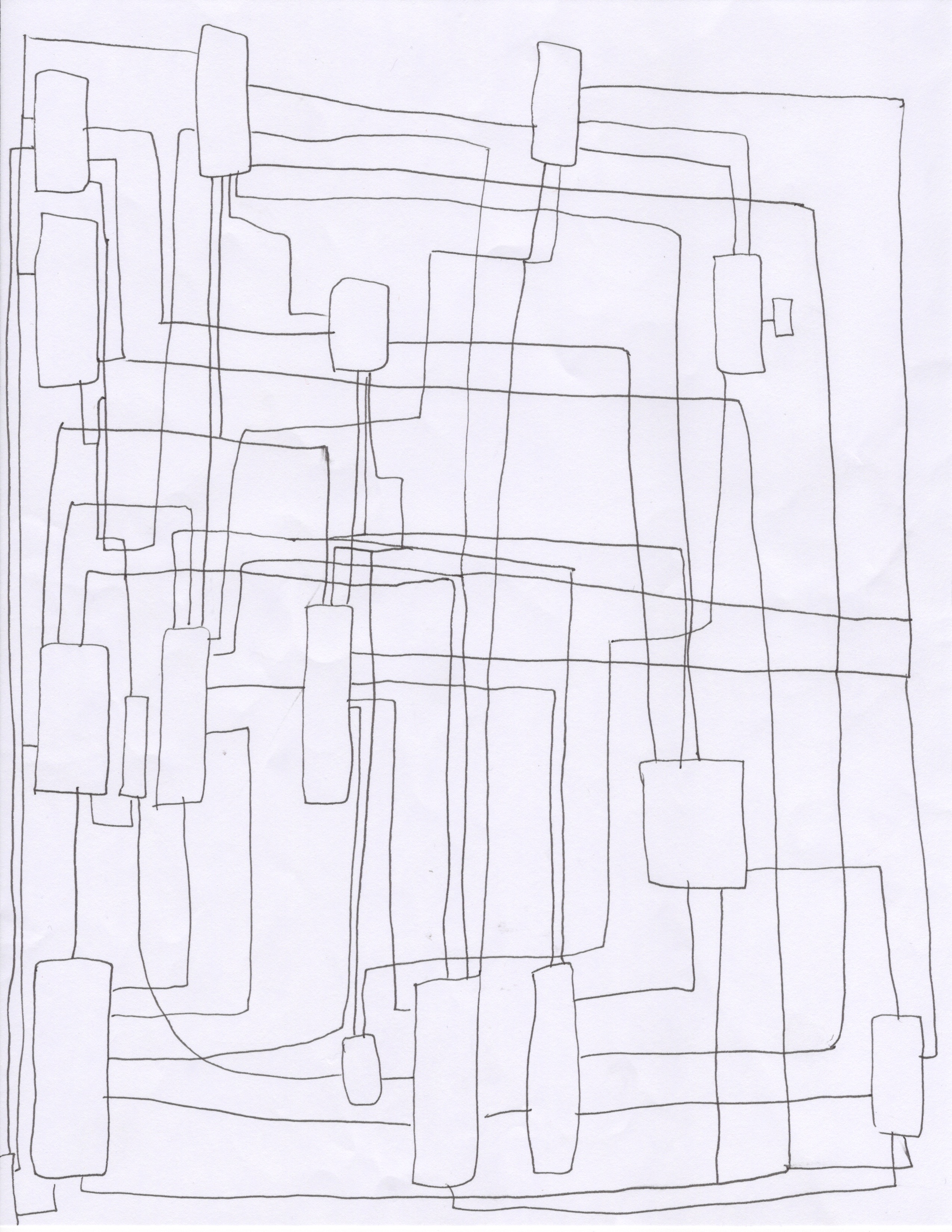
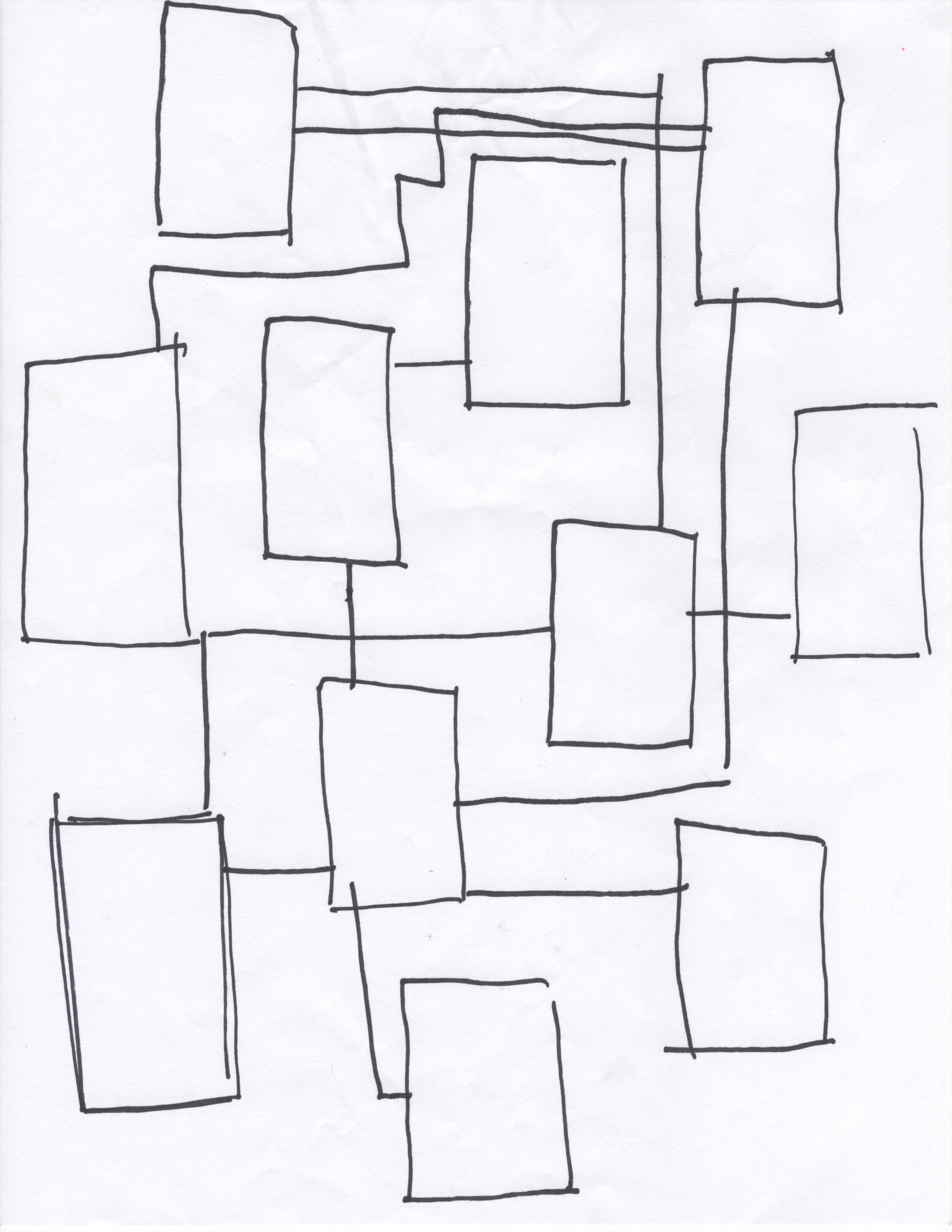
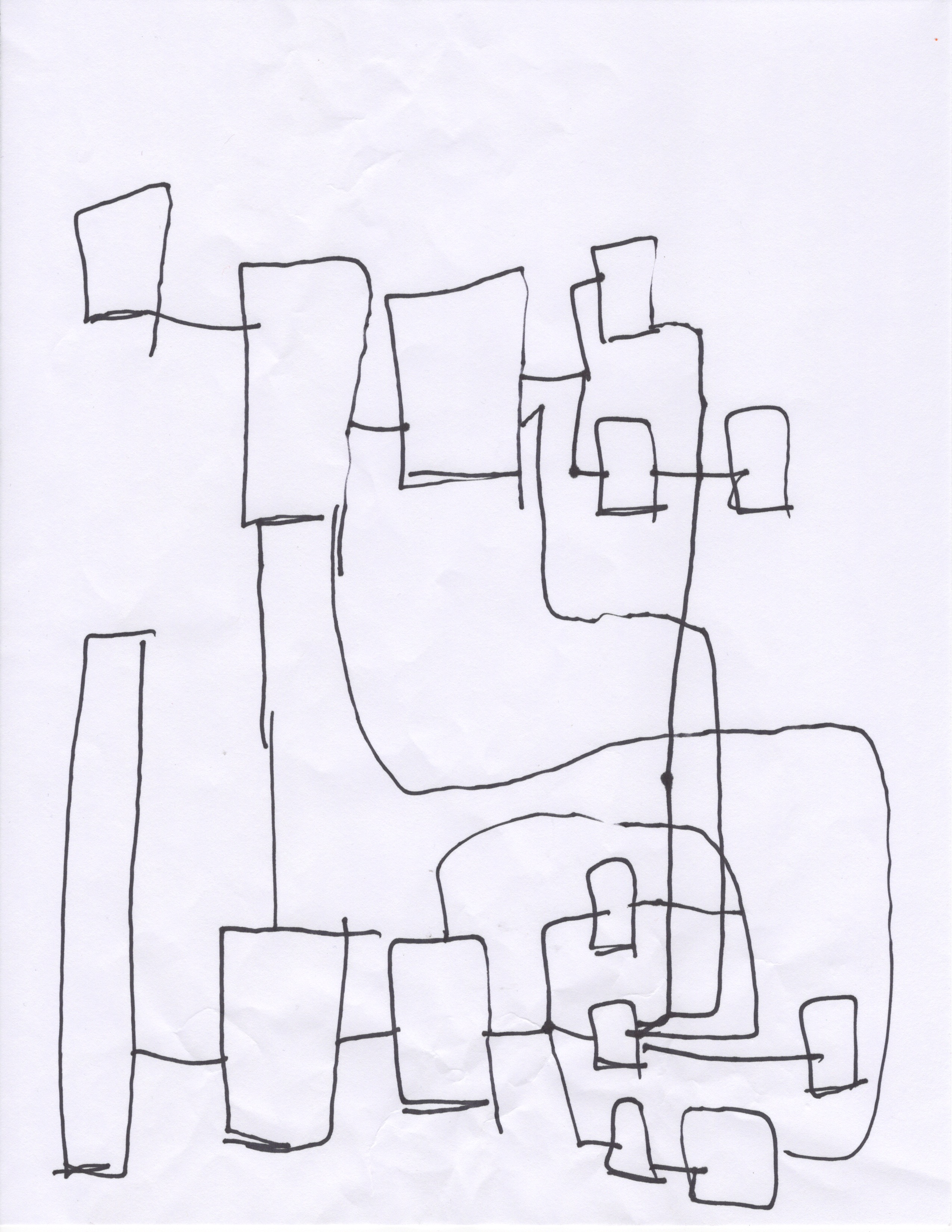
Database as a Relational Practice (2018)
A performative workshop in which participants used entity-relationship models, a foundation for database design, to outline a situation they considered difficult to resolve. Participants then used the design as a map for movement, assigning a gesture to each box and a rhythm to each line. At the end of the workshop, participants moved through a map that they had no memory of making.

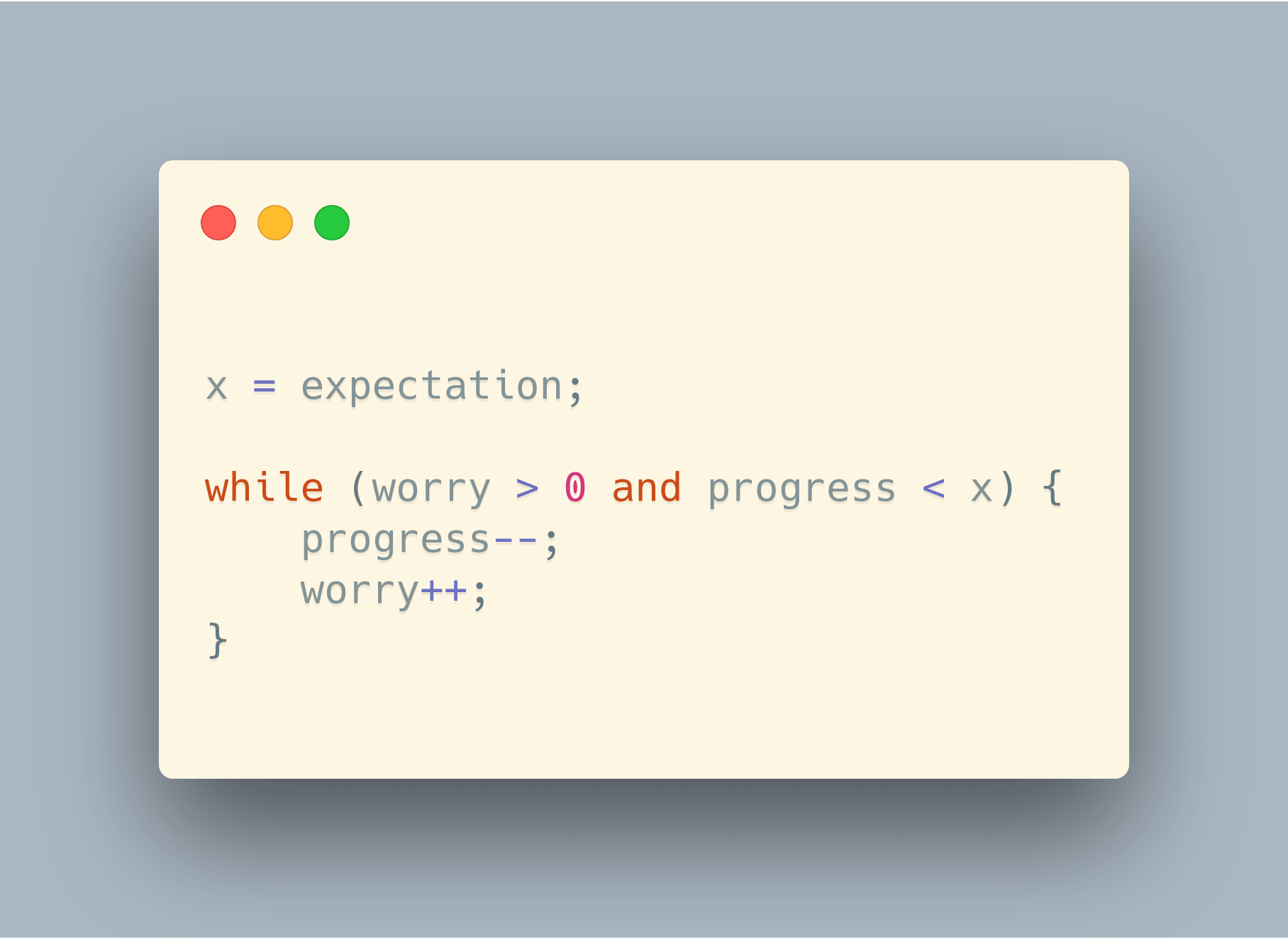
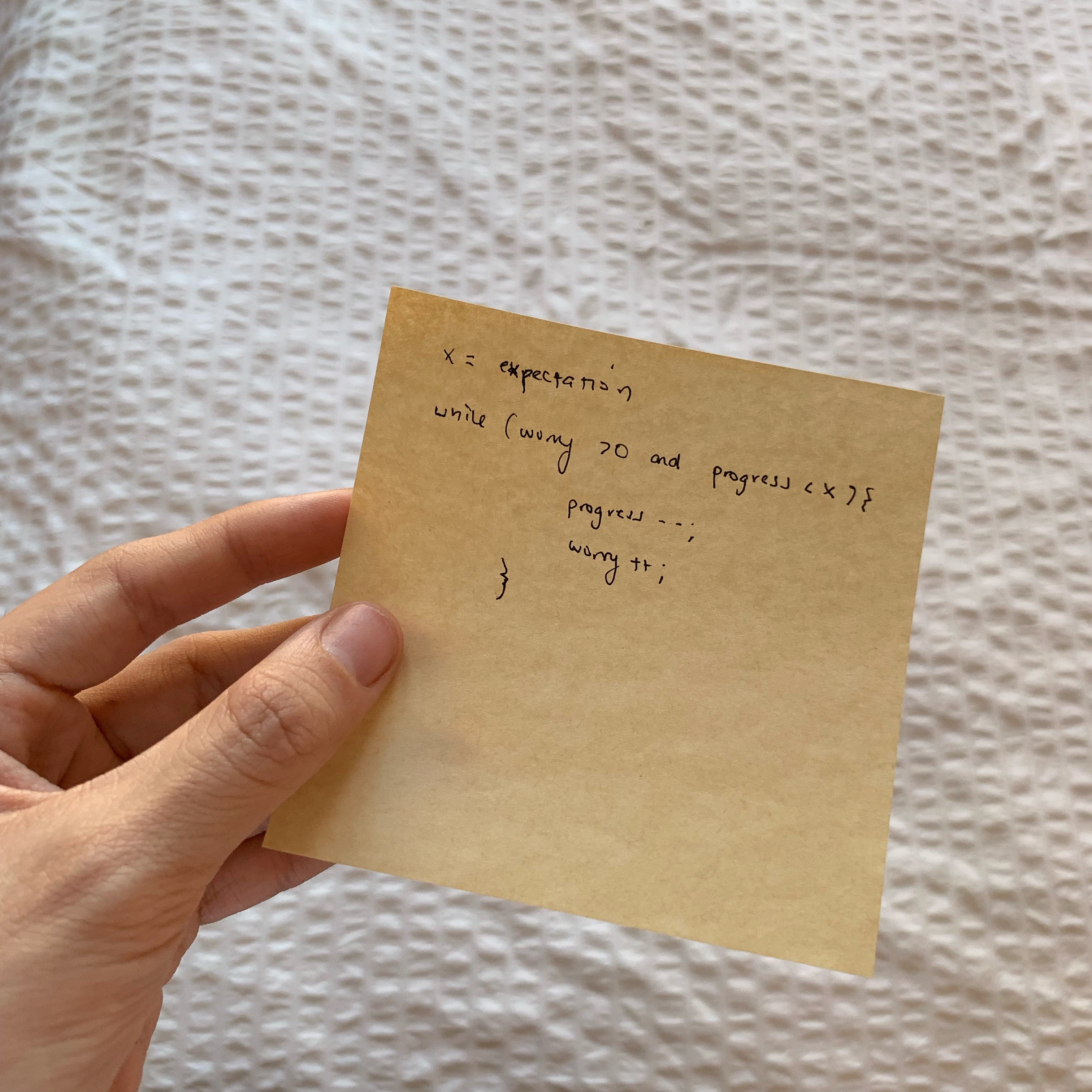
while(x): How to Write a Code Poem (2018)
while(x) is a reflective practice that considers code as a language for the logical processing of emotion. What are the constants? What are the variables?

Mirror Me (2018)


qlmQ (2018)
qlmQ subverts the use of an encrypted protection by exposing the artist’s private key on a common sticker. What is supposed to be a unique, secret identifier for the artist’s identity will be transposed onto a flexible, vulnerable, reproducible format designed for mass proliferation. The act of careless distribution positions privacy in a permanently public context and challenges the notion of their dichotomy. By sticking privacy onto public spaces globally, qlmQ asks: what is the potential for a spectrum between these two poles?

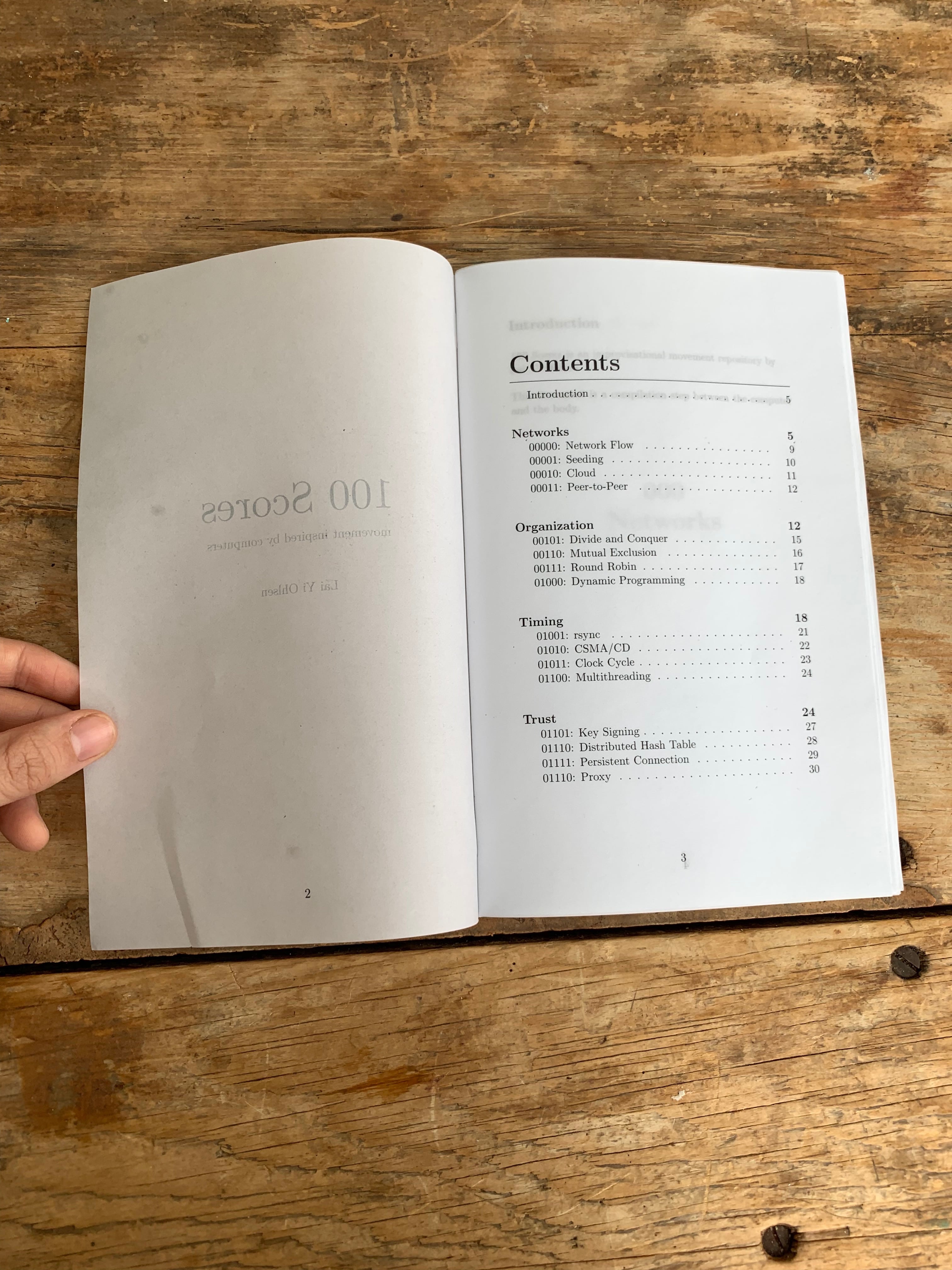
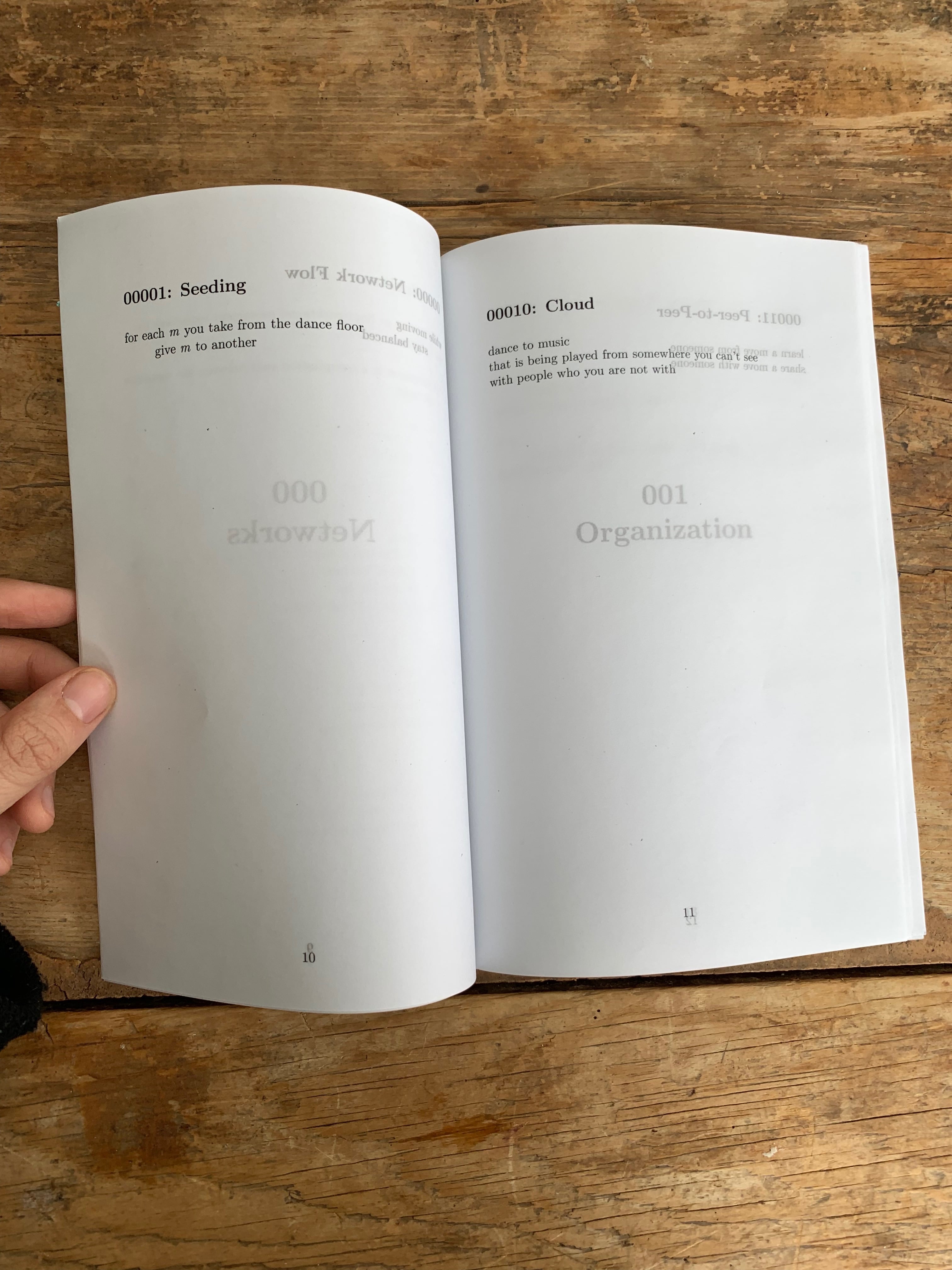
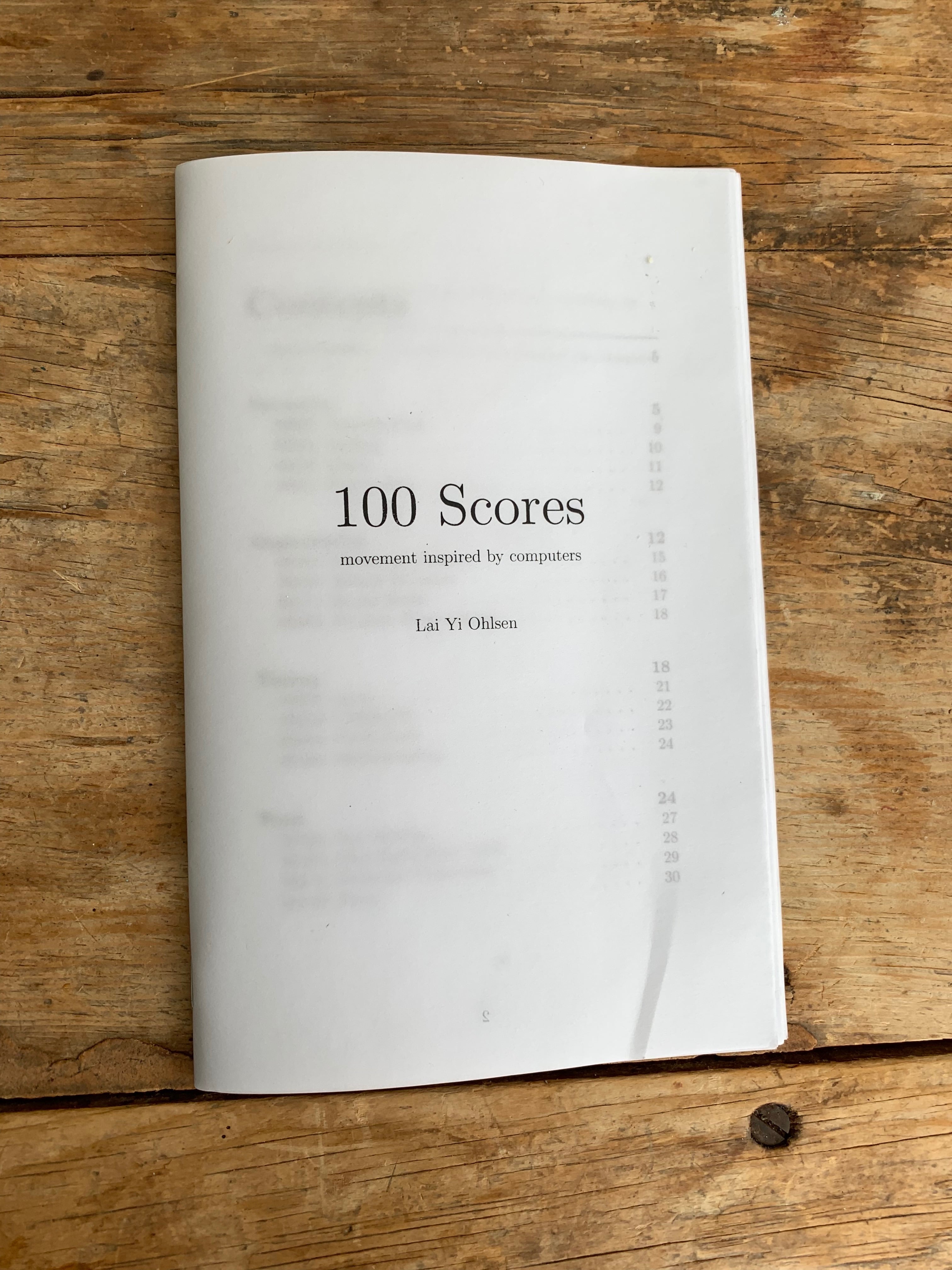
100 Scores (2018)
Improvisational movement scores based on computational algorithms, organized into four chapters (000, 001, 010 and 100) on Networks, Organization, Timing and Trust. Written to be danced, the scores use the body to translate computer theory into movement. From 2016 to 2017, they were performed with participants in five cities, building a repository of responses.